Challenges Of Fintech To Financial Regulatory Strategies
Challenges Of Fintech To Financial Regulatory Strategies
Rodríguez De Las Heras Ballell
The increasingly popular term of Fintech captures the accelerated and multidimensional transformation of contemporary financial markets driven and enabled by digital technologies and financial innovation. Although financial regulation is accustomed to grapple with a dynamic, highly changing, and demanding market, and the technological progress has been an important force in the...
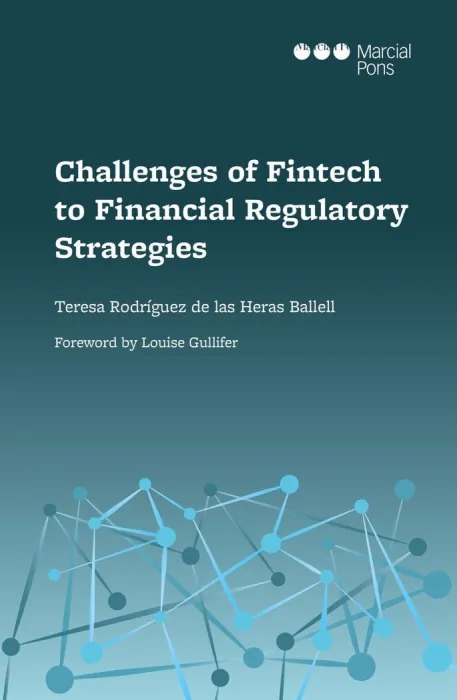
The increasingly popular term of Fintech captures the accelerated and multidimensional transformation of contemporary financial markets driven and enabled by digital technologies and financial innovation. Although financial regulation is accustomed to grapple with a dynamic, highly changing, and demanding market, and the technological progress has been an important force in the transformation of finance, the vertiginous pace of technological innovation and the unpredictable effects of its application on a large scale, the complexity and the breadth of the phenomenon, and the disruptive potential of the variety of innovative models represent unprecedented challenges for financial regulators and supervisors. Therefore, articulating a balanced, timely and effective regulatory response to Fintech challenges requires first to understand all the dimensions of such transformation, the emerging models, the technological developments and its applications, and the innovative products and services. This book, prepared by the author under the Legal Research Programme 2018 sponsored by the European Central Bank, devises a taxonomy to better comprehend, assess, and systematize the impact of digital innovation on financial markets on the basis of an original theory: the layers of digital financial innovation (architecture and structures, product and services, market players). This theory enables to identify, classify and categorize the challenges for regulation and supervision. Risks and benefits differ in each layer. After the analysis of concrete examples to apply the theory (robo advisers, crowdfunding platforms, aggregators and comparators, social trading and copy trading), the author elaborates a framework (based on three variables) to assess the soundness and test the resistance of the current regulatory system and guide the legal response to digital challenges. Finally, the book concludes with a set of principles and strategies to guide an effective, agile, and opportune regulatory response to Fintech.
Fernando Pérez Royo / Florián García Berro / Antonio Cubero Truyo / Francisco M Carrasco González / Maria Teresa Mories Jimenez / Ignacio Perez Royo
El Curso de Derecho Tributario. Parte Especial contiene la exposición completa y sistemática de los diferentes impuestos que integran el Sistema Tributario del Estado y los impuestos locales, precedida de un capítulo sobre la historia de su formación y seguida de otro sobre fiscalidad de la Unión Europea. La obra está destinada a cubrir las necesidades de un público diverso. Po...
Este Memento se estructura a través de las normas de registro y valoración contenidas en la segunda parte del Plan General de Contabilidad, con un análisis previo de su Marco Conceptual y legislación general aplicable, con una propuesta del cuadro de cuentas relacionadas y completado con las cuentas anuales y las normas específicas para distintos sujetos que se han podido apro...
Análisis sistemático de la tributación de la Semana Santa en España con especial atención a Hermandades y cofradías y a su tratamiento en los principales impuestos. ...
En el Memento Impuesto sobre Sociedades 2026 se realiza un análisis exhaustivo y rigurosamente actualizado de todos los aspectos del impuesto (ámbito de aplicación, base imponible, periodo impositivo, devengo...), así como de su gestión (pagos a cuenta, declaración, obligaciones formales, obligaciones contables y registrales, etc.). En él se abordan los distintos regímenes esp...
El Memento IVA realiza en un solo volumen el análisis más exhaustivo y clarificador sobre toda la normativa referente a este complejo y laberíntico impuesto, ofreciéndote una referencia de consulta rápida y rigurosa para resolver todas las cuestiones que pueden surgir en su aplicación práctica. En él se profundiza de forma sistemática en cada aspecto del impuesto, para que pue...
El objetivo de este libro es estudiar cómo nuestro ordenamiento tributario puede proteger la maternidad y la paternidad, y, en particular, cómo puede hacerlo a través de la conciliación. La fiscalidad puede ser un instrumento idóneo para fomentar la conciliación entre la vida personal y laboral y así contribuir a solucionar los dos problemas descritos: la brecha entre la mater...
El Memento IRPF es la referencia de consulta esencial para encontrar de forma muy rápida todas las respuestas sobre el impuesto que afecta de forma directa a la mayoría de las familias españolas, a los empresarios individuales y, por supuesto, a los asesores fiscales. A diferencia de otras obras, lejos de ofrecer un simple comentario sobre la norma, el Memento realiza un estud...
-5%
167,44 €159,07 €
Añadir a favoritos
-5%
12,50 €
11,88 €
Sobre IBD (Impresión Bajo Demanda)
Impresión bajo demanda (IBD) o publicación bajo demanda (POD – Print On Demand) es un sistema de publicación en la que se imprime solamente el número de ejemplares necesarios para atender su pedido (Impresión 1x1).
Imprimiremos el libro para usted, por lo que no está permitida la anulación, ni devolución del pedido (salvo error o defecto de imprenta).
17881693406a954c7c0ea3600
https://www.troa.es/libro/challenges-of-fintech-to-financial-regulatory-strategies_10484931048493Challenges Of Fintech To Financial Regulatory StrategiesThe increasingly popular term of Fintech captures the accelerated and multidimensional transformation of contemporary financial markets driven and enabled by digital technologies and financial innovation. Although financial regulation is accustomed to grapple with a dynamic, highly changing, and demanding market, and the technological progress has been an important force in the transformation of finance, the vertiginous pace of technological innovation and the unpredictable effects of its application on a large scale, the complexity and the breadth of the phenomenon, and the disruptive potential of the variety of innovative models represent unprecedented challenges for financial regulators and supervisors. Therefore, articulating a balanced, timely and effective regulatory response to Fintech challenges requires first to understand all the dimensions of such transformation, the emerging models, the technological developments and its applications, and the innovative products and services. This book, prepared by the author under the Legal Research Programme 2018 sponsored by the European Central Bank, devises a taxonomy to better comprehend, assess, and systematize the impact of digital innovation on financial markets on the basis of an original theory: the layers of digital financial innovation (architecture and structures, product and services, market players). This theory enables to identify, classify and categorize the challenges for regulation and supervision. Risks and benefits differ in each layer. After the analysis of concrete examples to apply the theory (robo advisers, crowdfunding platforms, aggregators and comparators, social trading and copy trading), the author elaborates a framework (based on three variables) to assess the soundness and test the resistance of the current regulatory system and guide the legal response to digital challenges. Finally, the book concludes with a set of principles and strategies to guide an effective, agile, and opportune regulatory response to Fintech. https://www.troa.es/imagenes/9788491/978849123699.webp11.8812.505.000.62InStockLibroshttps://www.troa.es/imagenes/9788491/978849123699.webp1634605163385616215181623551163214716142281621529162512816095841610656
Esta web utiliza cookies propias y de terceros que permiten al usuario la navegación a través de una página web (técnicas), para el seguimiento y análisis estadístico del comportamiento de los usuarios (analíticas), que permiten la gestión de los espacios publicitarios que, en su caso, el editor haya incluido en una página (publicitarias) y cookies que almacenan información del comportamiento de los usuarios obtenida a través de la observación continuada de sus hábitos de navegación. Si acepta este aviso consideraremos que acepta su uso. Puede obtener más información aquí.