Owing to the population stagnation suffered by Western countries over the last half century, the urban debate has been focused on naturalistic issues such as environmental concerns and sustainability. All of them pursue the enrichment of the urban artifice by being integrated in the natural kingdom. The Nervión Valley gives us the four classic elements of Nature: Water, Earth, ...
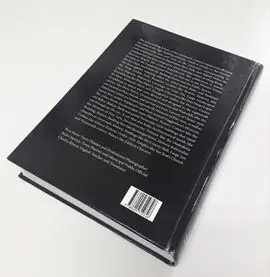
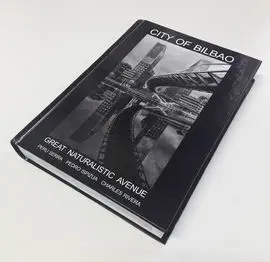
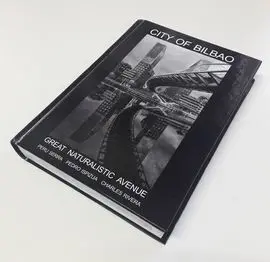
Owing to the population stagnation suffered by Western countries over the last half century, the urban debate has been focused on naturalistic issues such as environmental concerns and sustainability. All of them pursue the enrichment of the urban artifice by being integrated in the natural kingdom. The Nervión Valley gives us the four classic elements of Nature: Water, Earth, Air and Fire. Water flows down the river, Earth spreads along the riverbanks, Air is provided by the atmosphere and Fire is produced by the burning sun. Taking into account such elements, Bilbao has reinvented the Urban Gran Vía of the XIX century that has been turned into the Great Naturalistic Avenue of the XXI century. The natural birth of a space in which the urban activities are centralized is the germ that fertilizes the territory in order to deliver a new metropolitan life. At the advent of the 21st century, Bilbao's Central Area reached its come of age, right after the inauguration of the subway network. Because of this challenge, it is of relevance to delve into the knowledge of three basic matters. The first one is related to the urban growth and the polycentrality process. They are evolving on a par with the transportation technology that makes commuting possible and extends central hubs through a new generation of hierarchical multi-nodal networks. Secondly, a metamorphosis analysis of the nineteenth-century city has been conducted within the Central Activities Zone (CAZ). The foundational site ends up becoming the polarizing nucleus on which activities and public facilities of greater visibility within the Region gravitate. And finally, the accomplishments of these European river-cities are described because their extensive history offers us some notes and sketches that will help us to reveal in advance the uncertain future. The Great Naturalistic Avenue the Nervión River has been turned into is the result of joining both riverbanks. The façades of the amazing buildings that stand out in Portugalete and Las Arenas that are twinned by the Bizkaia Bridge opened the way for an exemplary coexistence for the future development of this legendary river. Some of the pictures shown in this publication help to discover a joint urban story of these two coastal municipalities. Following this example, the municipality of Bilbao has transformed the "Urban Crack" the river meant into the Avenue representing the Metropolis, in such a way that only this photographic report or a stroll along the riverbanks may reveal. The urban resource of the river course, as a crystalline mirror or as an impressionist canvas of the riversides that are paired through the bridges and the crossed visuals obtained from unusual angles, are typical discoveries that have been accomplished by an extraordinary urban research work, which will undoubtedly help us with the future metropolitan deployment of the Nervión River. The photographs presented herein reflect the research and creative work applied to Nature. There is no lack of kaleidoscopic atmospheres, crystalline watercourses, specular riverbeds, spectral landscapes, naturalized urban fronts, morning lights, natural sunsets and flames with no more fire than the sun. Nature is the experimental field, whereas architecture and urbanism, as supporting actors, share their small participation. Nature as a totem to which the limited urban artifice is subjected.
Peru Serra. Urban Architect and Professional Photographer Pedro Ispizua. Urban Architect and Municipal Officer Charles Rivera. English Teacher and Translator.
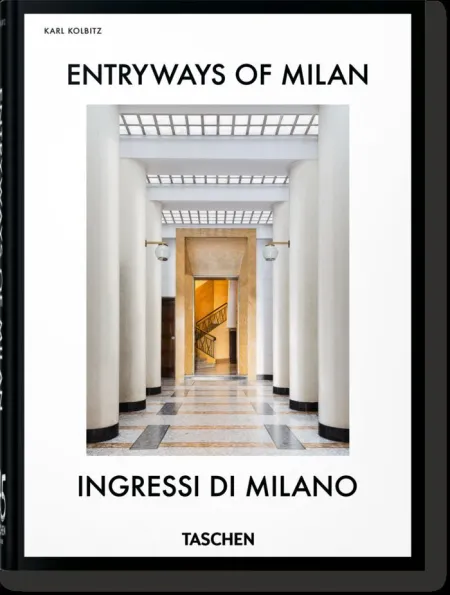
Las primeras impresiones cuentan, especialmente en Milán. En este viaje fotográfico sin precedentes, el editor Karl Kolbitz selecciona 144 de los vestíbulos más elegantes de Milán, fascinantes por su diversidad y esplendor. Estas vibrantes entradas milanesas, hasta ahora escondidas tras fachadas a menudo discretas, se revelan como deslumbrantes ejemplos del modernismo itali...
Un privilegiado acceso a la mente del genio de la arquitectura através de sus propios escritos. A lo largo de la historia, algunos libros han transformado la manera en que nos vemos a nosotros mismos y a los demás. Han inspirado el debate, la discordia, la guerra y la revolución. Han iluminado, indignado, provocado y consolado. Han enriquecido vidas, y también las han destruido...
Santiago Calatrava es un arquitecto, ingeniero estructural, escultor y artista de fama internacional. Desde el Complejo Deportivo Olímpico de Atenas 2004 hasta el Centro de Transporte del World Trade Center en Manhattan, exhibe una extraordinaria destreza en lo estético y en lo ingenieril y una gran sensibilidad tanto para la apariencia como para la anatomía de una estructu...
Centrales industriales, facultades universitarias, templos religiosos, torres de viviendas, moles hechas a medida de la Administración, obras nacidas de la fantasía de un genio. Eterno objeto de controversia y fascinación, la arquitectura brutalista ha marcado indefectiblemente nuestro paisaje en las últimas décadas. De norte a sur, de este a oeste, región a región, este volum...
-5%
29,90 €28,41 €
Añadir a favoritos
-5%
35,00 €
33,25 €
Sobre IBD (Impresión Bajo Demanda)
Impresión bajo demanda (IBD) o publicación bajo demanda (POD – Print On Demand) es un sistema de publicación en la que se imprime solamente el número de ejemplares necesarios para atender su pedido (Impresión 1x1).
Imprimiremos el libro para usted, por lo que no está permitida la anulación, ni devolución del pedido (salvo error o defecto de imprenta).
17859448456a735b0d6a84a00
https://www.troa.es/libro/city-of-bilbao_12510331251033City Of BilbaoOwing to the population stagnation suffered by Western countries over the last half century, the urban debate has been focused on naturalistic issues such as environmental concerns and sustainability. All of them pursue the enrichment of the urban artifice by being integrated in the natural kingdom. The Nervión Valley gives us the four classic elements of Nature: Water, Earth, Air and Fire. Water flows down the river, Earth spreads along the riverbanks, Air is provided by the atmosphere and Fire is produced by the burning sun. Taking into account such elements, Bilbao has reinvented the Urban Gran Vía of the XIX century that has been turned into the Great Naturalistic Avenue of the XXI century. The natural birth of a space in which the urban activities are centralized is the germ that fertilizes the territory in order to deliver a new metropolitan life. At the advent of the 21st century, Bilbao's Central Area reached its come of age, right after the inauguration of the subway network. Because of this challenge, it is of relevance to delve into the knowledge of three basic matters. The first one is related to the urban growth and the polycentrality process. They are evolving on a par with the transportation technology that makes commuting possible and extends central hubs through a new generation of hierarchical multi-nodal networks. Secondly, a metamorphosis analysis of the nineteenth-century city has been conducted within the Central Activities Zone (CAZ). The foundational site ends up becoming the polarizing nucleus on which activities and public facilities of greater visibility within the Region gravitate. And finally, the accomplishments of these European river-cities are described because their extensive history offers us some notes and sketches that will help us to reveal in advance the uncertain future. The Great Naturalistic Avenue the Nervión River has been turned into is the result of joining both riverbanks. The façades of the amazing buildings that stand out in Portugalete and Las Arenas that are twinned by the Bizkaia Bridge opened the way for an exemplary coexistence for the future development of this legendary river. Some of the pictures shown in this publication help to discover a joint urban story of these two coastal municipalities. Following this example, the municipality of Bilbao has transformed the "Urban Crack" the river meant into the Avenue representing the Metropolis, in such a way that only this photographic report or a stroll along the riverbanks may reveal. The urban resource of the river course, as a crystalline mirror or as an impressionist canvas of the riversides that are paired through the bridges and the crossed visuals obtained from unusual angles, are typical discoveries that have been accomplished by an extraordinary urban research work, which will undoubtedly help us with the future metropolitan deployment of the Nervión River. The photographs presented herein reflect the research and creative work applied to Nature. There is no lack of kaleidoscopic atmospheres, crystalline watercourses, specular riverbeds, spectral landscapes, naturalized urban fronts, morning lights, natural sunsets and flames with no more fire than the sun. Nature is the experimental field, whereas architecture and urbanism, as supporting actors, share their small participation. Nature as a totem to which the limited urban artifice is subjected.
Peru Serra. Urban Architect and Professional Photographer Pedro Ispizua. Urban Architect and Municipal Officer Charles Rivera. English Teacher and Translator. https://www.troa.es/imagenes/9788409/978840931092.webp33.2535.005.001.75OutOfStockhttps://www.troa.es/imagenes/9788409/978840931092.webp1632976162373216217351622001162338016248971630405163297216287771612839
Esta web utiliza cookies propias y de terceros que permiten al usuario la navegación a través de una página web (técnicas), para el seguimiento y análisis estadístico del comportamiento de los usuarios (analíticas), que permiten la gestión de los espacios publicitarios que, en su caso, el editor haya incluido en una página (publicitarias) y cookies que almacenan información del comportamiento de los usuarios obtenida a través de la observación continuada de sus hábitos de navegación. Si acepta este aviso consideraremos que acepta su uso. Puede obtener más información aquí.