
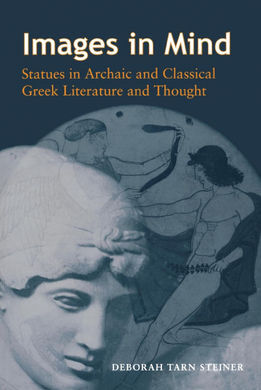
IMAGES IN MIND. STATUES IN ARCHAIC AND CLASSICAL GREEK LITERATURE AND THOUGHT
Deborah SteinerAhorras un 5,0%
62,14 €
59,03 €
- Editorial: PRINCETON UNIVERSITY PRESS
- Año de edición: 2002
- ISBN: 978-0-691-09488-5
- Páginas: 380
- Encuadernación: Rústica
- Colección: < Genérica >
- Idioma: Inglés
Ahorras un 5,0%
62,14 €
59,03 €
Alerta disponibilidad onlineAhorras un 5,0%
62,14 €
59,03 €
In archaic and classical Greece, statues played a constant role in people's religious, political, economic, aesthetic, and mental lives. Evidence of many kinds demonstrates that ancient Greeks thought about--and interacted with--statues in ways very different from our own. This book recovers ancient thinking about statues by approaching them through contemporary literary sources. It not only shows that ancient viewers conceived of images as more operative than aesthetic, but additionally reveals how poets and philosophers found in sculpture a practice ''good to think with.''
Deborah Tarn Steiner considers how Greek authors used images to ponder the relation of a copy to an original and of external appearance to inner reality. For these writers, a sculpture could straddle life and death, encode desire, or occasion reflection on their own act of producing a text. Many of the same sources also reveal how thinking about statues was reflected in the objects' everyday treatment. Viewing representations of gods and heroes as vessels hosting a living force, worshippers ritually washed, clothed, and fed them in order to elicit the numinous presence within.
By reading the plastic and verbal sources together, this book offers new insights into classical texts while illuminating the practices surrounding the design, manufacture, and deployment of ancient images. Its argument that images are properly objects of cultural and social--rather than purely aesthetic--study will attract art historians, cultural historians, and anthropologists, as well as classicists.
Añadir a mis favoritos
Compartir