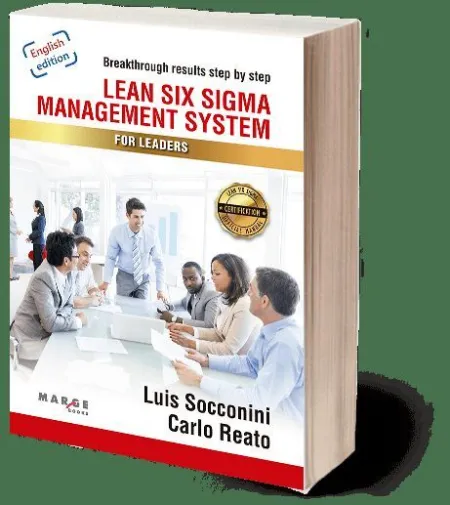
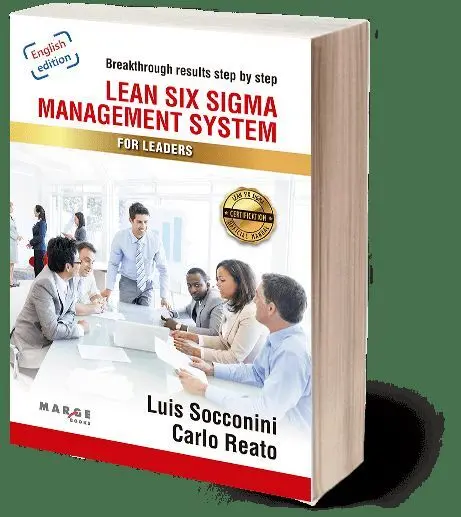
Lean Six Sigma Management System For Leaders
Luis Vicente Socconini Perez Gomez
Henry Ford implemented the lean concept in the early 1900s, Toyota started TPS in the 1970's, Motorola first initiated the Six Sigma journey, followed by GE and many others just years later. Still today, Lean Six Sigma remains the strongest continuous improvement methodology in order to achieve stable and lean processes and the number of defects in a single digit figure per mil...
Henry Ford implemented the lean concept in the early 1900s, Toyota started TPS in the 1970's, Motorola first initiated the Six Sigma journey, followed by GE and many others just years later. Still today, Lean Six Sigma remains the strongest continuous improvement methodology in order to achieve stable and lean processes and the number of defects in a single digit figure per million products produced or services provided. Over the last two decades we have studied why companies succeeded, while others failed in the journey of Lean Six Sigma. This book is the strong guide and compilation, of what needs to be done to successfully implement and benefit from a strong Lean Six Sigma - Management System The book is written for: Leaders - top management, boards of directors and owners. Any Industry from manufacturing to all types of services. Any company size - from a 1-person business up to mid or large-scale companies. As a successful and busy leader, you want to be aware of the strong benefits that can be achieved by implementing Lean Six Sigma Management in your company. This is a must-read book, if you want to
Reseña del Editor
Preface 1. Introduction 1.1 Why we wrote this book and what are the key takeaways for readers? 1.2 Lean Company Model and Maturity Levels 1.3 Principles upon which the culture is based 1.4 What is Lean Six Sigma and what at are the myths about it? 1.5 Theory of Constraints TOC 1.6 Waste (Muda) and the Hidden Company 1.7 Industry 4.0 / Industrial Internet of Things IIoT 1.8 Benefits of implementing a Lean Six Sigma Management System in your company 1.9 Leader?s Role, Responsibilities and Knowledge Requirements 1.10 Key Points 2. Strategic Tools 2.1 Lean Six Sigma Company Assessment Maturity Levels 2.2 Leadership and Change Management 2.3 Value Proposition ? Canvas 2.4 Lean Strategy, Vision and Target Deployment with Hoshin Kanri 2.5 KPI Key Performance Indicators and Box Score 2.6 Value Stream Structure and Mapping 2.7 Agile Project Management with SCRUM 2.8 Standard Work for Leaders 2.9 KATA 2.10 GEMBA ? Walk 2.11 Talent Management 2.12 Key Points 3. Tactical Tools 3.1 The Lean Six Sigma Tool Box 3.2 Kaizen for Continuous Improvement and Kaikaku for Innovation 3.3 Basic tools: Housekeeping 5 S?s, Andon, Standardized Work, Poka Yoke 3.4 Problem solving A3 and Ishikawa Diagram 3.5 Prevention Method ? FMEA 3.6 Continuous Flow ? One-Piece Flow 3.7 TPM ? Total Preventive Maintenance 3.8 SMED ? Quick Change Over 3.9 Kanban 3.10 Six Sigma l
Otros libros del autor
Artículos relacionados