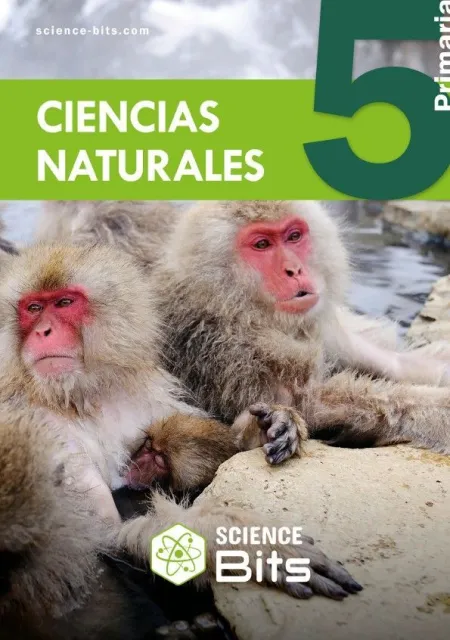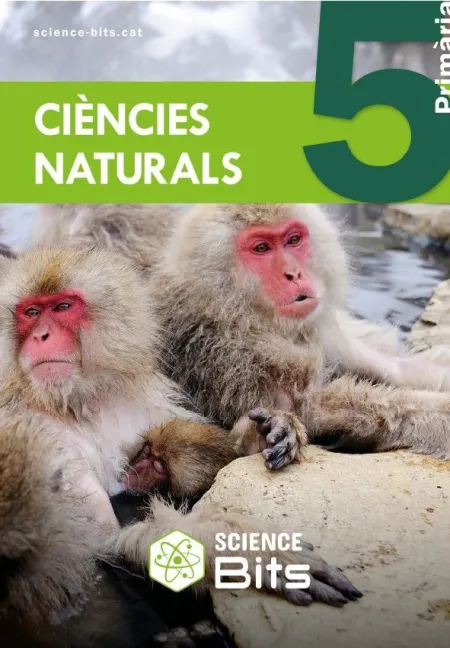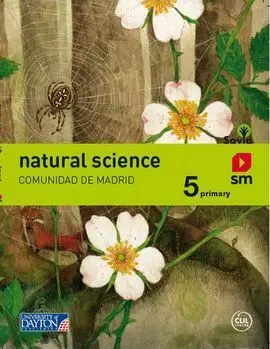
Natural Science. 5 Primary. Savia. Madrid
Isabel Pueyo Lobera / Antonio Jose Hidalgo Moreno / Alberto Navarro Elbal / Sergio Lopez / Alberto Peña Perez / Monserrat Gonzalez
The MAS SAVIA Project for Natural Science takes advantage of different tools and methodologies to motivate the learning, understanding and application of the contents. The contents of each learning block are organized into three learning moments: Let's Get Started, Let's Understand and Let's use. Inserted between these are Make a Change (service-learning activities with many o...
The MAS SAVIA Project for Natural Science takes advantage of different tools and methodologies to motivate the learning, understanding and application of the contents. The contents of each learning block are organized into three learning moments: Let's Get Started, Let's Understand and Let's use. Inserted between these are Make a Change (service-learning activities with many opportunities to work using co-operative strategies) in which both communicative and cognitive skills are put into practice. Many of the Let's Get Started and Let's Use sections take the form of experimental workshops. This general philosophy of promoting active learning is manifest in the final Making a Change task which integrates knowledge, skills and multiple intelligences. Natural Science takes the CLIL approach to making language and contents accessible with careful scaffolding of language and the visual summarizing of content. There are regular opportunities to review what has been learned. Attention to diversity is catered for by online testing which can give the teacher a clear and immediate evaluation of the class's performance by identifying students who may be having difficulties. Natural Science has been created in tandem with EPS: a new CLIL based English course for plurilingual primary schools which integrates closely with the Natural Science learning paths
Reseña del Editor
Contents: 1.The organisation of living things 1. The characteristics of living things 8 2. The cell 10 3. Unicellular and multicellular organisms 12 4. How the body works 14 2.The variety of life 1. The five kingdoms 22 2. Fungi, protozoa and bacteria 24 3. From individual to community 26 4. Relationships between living things 28 3.Ecosystems 1. What do we need to live? 40 2. Food chains and food webs 42 3. Terrestial ecosystems: from plains to mountains 44 4. Aquatic ecosystems 46 4.Ecological balance on the Earth 1. Terrestrial ecosystems 54 2. Balanced ecosystems 56 3. How human beings change the environment 58 4. Ecological imbalance 60 5.Energy 1. What is energy? 72 2. Sources of energy 74 3. Energy and the environment 76 4. Sustainable development 78 5. Energy-saving measures 80 6.Heat, light and electricity 1. Heat 88 2. Light 90 3. Electricity 92 4. Electrical current 94
Información de seguridad
- Cargando la información ...
Otros libros del autor
Artículos relacionados