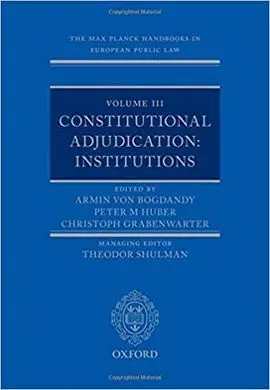
The Max Planck Handbooks in European Public Law describe and analyse public law of the European legal space, an area that encompasses not only the law of the European Union but also the European Convention on Human Rights and, importantly, the domestic public laws of European states. Recognizing that the ongoing vertical and horizontal processes of European integration make leg...
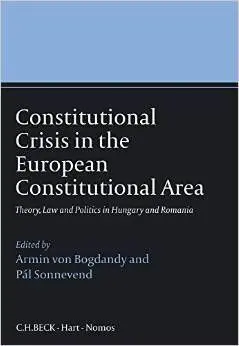
The Max Planck Handbooks in European Public Law describe and analyse public law of the European legal space, an area that encompasses not only the law of the European Union but also the European Convention on Human Rights and, importantly, the domestic public laws of European states. Recognizing that the ongoing vertical and horizontal processes of European integration make legal comparison the task of our time for both scholars and practitioners, the series aims to foster the development of a specifically European legal pluralism and to contribute to the legitimacy and efficiency of European public law.
The first volume of the series began this enterprise with an appraisal of the evolution of the state and its administration, offering both cross-cutting contributions and specific country reports. The third volume (the second in chronological terms) continues this approach with an in-depth appraisal of constitutional adjudication in various and diverse European countries. Fourteen country reports and two cross-cutting contributions investigate the antecedents, foundations, organization, procedure, and outlook of constitutional adjudicators throughout the Continent. They include countries with powerful constitutional courts, jurisdictions with traditional supreme courts, and states with small institutions and limited ex ante review. In keeping with the focus on a diverse but unified legal space, each report also details how its institution fits into the broader association of constitutional courts that, through dialogue and conflict, brings to fruition the European legal space. Together, the chapters of this volume provide a strong and diverse foundation for this dialogue to flourish.
Agustín Motilla De La Calle / Y Otros / José María Porras Ramírez / Maria Del Carmen Caparros Soler / Maria Leticia Rojo Alvarez-Manzaneda / Requena De Torr
En esta obra se estudia la significación y el alcance que presenta el derecho fundamental a la libertad religiosa, en perspectiva estatal, internacional y europea. Seguidamente, se analiza la titularidad del derecho, exponiendo tanto su dimensión subjetiva, esto es, individual y colectiva, como su no menos notable dimensión objetiva o institucional. Esta última requiere la eval...
https://www.aranzadilaley.es/tienda/derecho-e-inteligencia-artificialExamina cómo la utilización de la inteligencia artificial incide en los derechos fundamentales y qué riesgos genera su despliegue en distintos contextos. En una primera parte se abordan las responsabilidades jurídicas derivadas del uso de sistemas de inteligencia artificial cuando interactúan con derechos fund...
Análisis del desnudo en espacios públicos como manifestación de derechos fundamentales y examen de la validez constitucional de su prohibición en el ordenamiento español. ...
https://www.trotta.es/libros/proyectar-el-futuro/9788413643595/Ferrajoli sienta las bases para una verdadera Constitución global y para vincular los poderes políticos y económicos a los derechos humanos y a la justicia social. ¿Cómo hacer frente a las grandes emergencias globales de nuestro tiempo? Las guerras, las desigualdades, la crisis medioambiental, la explotación laboral...
https://www.aranzadilaley.es/tienda/el-derecho-a-la-igualdad-efectiva-de-mujeres-y-hombresAnálisis jurídico integral, crítico y actualizado de la Ley Orgánica 3/2007 y de la configuración del derecho a la igualdad efectiva de mujeres y hombres en España.La obra ofrece una evaluación jurídico sistemática de la Ley Orgánica 3/2007 tras casi veinte años de vigencia. Examina el trá...
https://www.aranzadilaley.es/tienda/la-amnistia-a-debateAnálisis exhaustivo sobre la Ley de Amnistía de 2024 y su evaluación constitucional a través de las contribuciones de destacados juristas y políticos que abordan el impacto jurídico y social de la amnistía en España.Este libro ofrece un análisis profundo sobre la Ley de Amnistía de 2024 y la Sentencia del Tribunal Constitu...
La Constitución Española está más cerca de tu vida de lo que imaginas. Está en la libertad con la que opinas, en las garantías que te protegen frente al poder, en las leyes que se aprueban, en el funcionamiento del Gobierno, en los jueces, en las Comunidades Autónomas y en los derechos que ejercemos cada día casi sin darnos cuenta. Este libro ofrece una introducción clara, didá...
-5%
45,00 €42,75 €
Añadir a favoritos
-5%
256,26 €
243,45 €
Sobre IBD (Impresión Bajo Demanda)
Impresión bajo demanda (IBD) o publicación bajo demanda (POD – Print On Demand) es un sistema de publicación en la que se imprime solamente el número de ejemplares necesarios para atender su pedido (Impresión 1x1).
Imprimiremos el libro para usted, por lo que no está permitida la anulación, ni devolución del pedido (salvo error o defecto de imprenta).
00
https://www.troa.es/libro/the-max-planck-handbooks-in-european-public-law_10680501068050The Max Planck Handbooks In European Public LawThe Max Planck Handbooks in European Public Law describe and analyse public law of the European legal space, an area that encompasses not only the law of the European Union but also the European Convention on Human Rights and, importantly, the domestic public laws of European states. Recognizing that the ongoing vertical and horizontal processes of European integration make legal comparison the task of our time for both scholars and practitioners, the series aims to foster the development of a specifically European legal pluralism and to contribute to the legitimacy and efficiency of European public law.
The first volume of the series began this enterprise with an appraisal of the evolution of the state and its administration, offering both cross-cutting contributions and specific country reports. The third volume (the second in chronological terms) continues this approach with an in-depth appraisal of constitutional adjudication in various and diverse European countries. Fourteen country reports and two cross-cutting contributions investigate the antecedents, foundations, organization, procedure, and outlook of constitutional adjudicators throughout the Continent. They include countries with powerful constitutional courts, jurisdictions with traditional supreme courts, and states with small institutions and limited ex ante review. In keeping with the focus on a diverse but unified legal space, each report also details how its institution fits into the broader association of constitutional courts that, through dialogue and conflict, brings to fruition the European legal space. Together, the chapters of this volume provide a strong and diverse foundation for this dialogue to flourish. https://www.troa.es/imagenes/9780198/978019872641.webp243.45256.265.0012.81OutOfStockLibroshttps://www.troa.es/imagenes/9780198/978019872641.webp1636264162512116244471623546161522016180111616116161023316126011612602
Esta web utiliza cookies propias y de terceros que permiten al usuario la navegación a través de una página web (técnicas), para el seguimiento y análisis estadístico del comportamiento de los usuarios (analíticas), que permiten la gestión de los espacios publicitarios que, en su caso, el editor haya incluido en una página (publicitarias) y cookies que almacenan información del comportamiento de los usuarios obtenida a través de la observación continuada de sus hábitos de navegación. Si acepta este aviso consideraremos que acepta su uso. Puede obtener más información aquí.