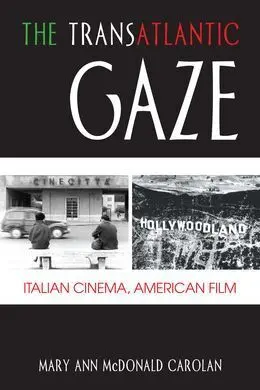
The Transatlantic Gaze. Italian Cinema, American Film
Mary Carolan / Mcdonald Carolan
Tracks the influence of Italian cinema on American film from the postwar period to the present.In The Transatlantic Gaze, Mary Ann McDonald Carolan documents the sustained and profound artistic impact of Italian directors, actors, and screenwriters on American film. Working across a variety of genres, including neorealism, comedy, the Western, and the art film, Carolan explores...
Tracks the influence of Italian cinema on American film from the postwar period to the present. In The Transatlantic Gaze, Mary Ann McDonald Carolan documents the sustained and profound artistic impact of Italian directors, actors, and screenwriters on American film. Working across a variety of genres, including neorealism, comedy, the Western, and the art film, Carolan explores how and why American directors from Woody Allen to Quentin Tarantino have adapted certain Italian trademark techniques and motifs. Allen's To Rome with Love (2012), for example, is an homage to the genius of Italian filmmakers, and to Federico Fellini in particular, whose Lo sceicco bianco/The White Sheik (1952) also resonates with Allen's The Purple Rose of Cairo (1985) as well as with Neil LaBute's Nurse Betty (2000). Tarantino's Kill Bill saga (2003, 2004) plays off elements of Sergio Leone's spaghetti Western C'era una volta il West/Once Upon a Time in the West (1968), a transatlantic conversation about the Western that continues in Tarantino's Oscar-winning Django Unchained (2012). Lee Daniels's Precious (2009) and Spike Lee's Miracle at St. Anna (2008), meanwhile, demonstrate that the neorealism of Roberto Rossellini and Vittorio De Sica, which arose from the political and economic exigencies of postwar Italy, is an effective vehicle for critiquing social issues such as poverty and racism in a contemporary American context. The book concludes with an examination of American remakes of popular Italian films, a comparison that offers insight into the similarities and differences between the two cultures and the transformations in genre, both subtle and obvious, that underlie this form of cross-cultural exchange.
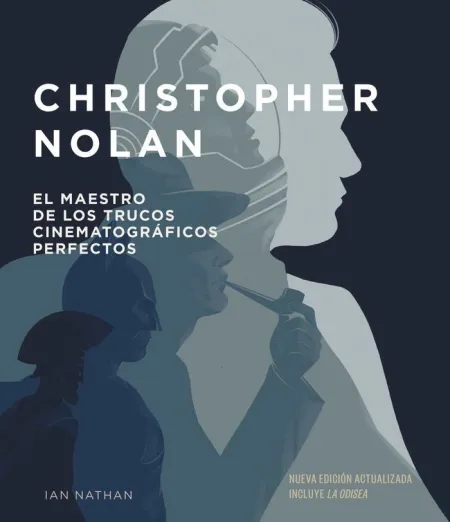
* Christopher Nolan no es un cineasta clásico. Sus historias son laberintos épicos en los que el tiempo se expande y se retuerce, se impone y se diluye. Desde su debut en 1998 con Following hasta La Odisea, cada nuevo estreno es un acontecimiento donde no existe el cuándo, sino el cómo. * Ha sido superhéroe atormentado, mago, policía insomne, astronauta, soldado y ladrón del s...
En un mundo cada vez más convulso, pocas cosas resultan tan reconfortantes como reencontrarse con una buena película que nos devuelva la fe en la vida, en el amor o en el simple poder de una sonrisa. Las veinte mejores películas para sentirse bien es una invitación a ese oasis emocional: un recorrido por algunas de las obras más entrañables, luminosas y conmovedoras que nos ha ...
¿Cómo se filma un unicornio? Documentales que quizás nunca verán la luz. Un director que se enfrenta a la traición. Un narrador que miente, que reconstruye su memoria a través de las imágenes, intentando atrapar lo que ya no existe. Cómo se filma un unicornio es la historia de un hombre obsesionado con filmar la belleza, mientras su vida se deshace en un equilibrio frágil y su ...
Vivimos en una sociedad acelerada y desbordada, llena de estímulos audiovisuales que nos incitan a interactuar, pero que nos dejan poco espacio para el encuentro y la relación. Es un momento de urgencia social que debe llevarnos a replantear nuestros cimientos fundamentales. Es, en definitiva, el tiempo de la reflexión sobre la mirada. Este libro busca indagar sobre la relevanc...
En el Museo del Holocausto de Washington DC no se entra con entrada sino con pasaporte. Puedes ser una mujer, un anciano, un joven, un niño o un hombre. Yo he sido Bertha Adler, Aron Dereczynski, Moishe Menyuk y Zalie Waldhorn. He leído sus vidas con detenimiento, siguiendo los pormenores antes de desembocar en las cámaras de gas o en una fosa común después de un fusilamiento. ...
Los Monty Python no han pasado a la historia solo por haber hecho reír a varias generaciones, sino por haber cambiado desde dentro la manera misma de entender la comedia. Bajo la apariencia de sketches inconexos, humor absurdo y provocación constante, lo que estaba en juego era una inteligencia incómoda, capaz de tensar el lenguaje, ridiculizar la autoridad y poner en evidencia...
En su prestigiosa carrera como fotógrafo de Hollywood, Bob Willoughby tomó fotografías de Marilyn Monroe, Elizabeth Taylor y Jane Fonda que hicieron historia, pero sigue siendo fiel a su musa: Audrey Kathleen Ruston, más tarde Edda van Heemstra Hepburn-Ruston, más conocida como Audrey Hepburn. Una mañana de 1953 le pidieron a Willoughby que fotografiara a la actriz en ciernes r...
-5%
15,00 €14,25 €
Añadir a favoritos
-5%
87,53 €
83,15 €
Sobre IBD (Impresión Bajo Demanda)
Impresión bajo demanda (IBD) o publicación bajo demanda (POD – Print On Demand) es un sistema de publicación en la que se imprime solamente el número de ejemplares necesarios para atender su pedido (Impresión 1x1).
Imprimiremos el libro para usted, por lo que no está permitida la anulación, ni devolución del pedido (salvo error o defecto de imprenta).
https://www.troa.es/libro/the-transatlantic-gaze-italian-cinema-american-film_756950756950The Transatlantic Gaze. Italian Cinema, American FilmTracks the influence of Italian cinema on American film from the postwar period to the present. In The Transatlantic Gaze, Mary Ann McDonald Carolan documents the sustained and profound artistic impact of Italian directors, actors, and screenwriters on American film. Working across a variety of genres, including neorealism, comedy, the Western, and the art film, Carolan explores how and why American directors from Woody Allen to Quentin Tarantino have adapted certain Italian trademark techniques and motifs. Allen's To Rome with Love (2012), for example, is an homage to the genius of Italian filmmakers, and to Federico Fellini in particular, whose Lo sceicco bianco/The White Sheik (1952) also resonates with Allen's The Purple Rose of Cairo (1985) as well as with Neil LaBute's Nurse Betty (2000). Tarantino's Kill Bill saga (2003, 2004) plays off elements of Sergio Leone's spaghetti Western C'era una volta il West/Once Upon a Time in the West (1968), a transatlantic conversation about the Western that continues in Tarantino's Oscar-winning Django Unchained (2012). Lee Daniels's Precious (2009) and Spike Lee's Miracle at St. Anna (2008), meanwhile, demonstrate that the neorealism of Roberto Rossellini and Vittorio De Sica, which arose from the political and economic exigencies of postwar Italy, is an effective vehicle for critiquing social issues such as poverty and racism in a contemporary American context. The book concludes with an examination of American remakes of popular Italian films, a comparison that offers insight into the similarities and differences between the two cultures and the transformations in genre, both subtle and obvious, that underlie this form of cross-cultural exchange.
Esta web utiliza cookies propias y de terceros que permiten al usuario la navegación a través de una página web (técnicas), para el seguimiento y análisis estadístico del comportamiento de los usuarios (analíticas), que permiten la gestión de los espacios publicitarios que, en su caso, el editor haya incluido en una página (publicitarias) y cookies que almacenan información del comportamiento de los usuarios obtenida a través de la observación continuada de sus hábitos de navegación. Si acepta este aviso consideraremos que acepta su uso. Puede obtener más información aquí.