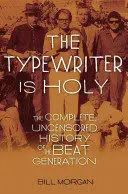
The Complete, Uncensored History Of The Beat Generation
2014 ACKER AWARD WINNERu003cbru003eu003cbru003eAnyone who cares to understand the literary and cultural ferment of America in the later twentieth century must be familiar with the writings and lives of those scruffy bohemians known as the Beat Generation.u003cbru003eu003cbru003eIn this highly entertaining work, Bill Morgan, the country's leading authority on the movement and a ...
2014 ACKER AWARD WINNERu003cbru003eu003cbru003eAnyone who cares to understand the literary and cultural ferment of America in the later twentieth century must be familiar with the writings and lives of those scruffy bohemians known as the Beat Generation.u003cbru003eu003cbru003eIn this highly entertaining work, Bill Morgan, the country's leading authority on the movement and a man who personally knew most of the Beats, narrates the history of these writers as primarily a social group of friends, tracing their origins together during the World War II years to the full blossoming of their notoriety in the late 1950s to their profound influence on the social upheaval of the 1960s. Indeed, it is impossible to comprehend the sixties without first grasping the importance of the social ripples set in motion by the Beats a decade earlier.u003cbru003eu003cbru003eAlthough their prose and poetry varied in style and for the most part did not represent a genuine literary movement, the Beats, through their words and nonconformist lives, collectively posed a challenge to the staid and complacent America of the postwar years. They believed in free expression, opposing all censorship; they dabbled in free love; they practiced Eastern philosophy, leading to an embrace in America of alternative forms of spirituality; sooner than others, they watched with dismay the increasingly heavy hand of military and corporate culture in our national life; they embraced the aspirations, as well as the lingo, of urbanized black Americans. They believed in the liberating influence of hallucinogenic drugs.u003cbru003eu003cbru003eIn short, the Beats were thoroughly American in their love of individual freedom. Perhaps it should come as no surprise that J. Edgar Hoover described them in 1960 as one of the three greatest threats to American security (after communism and intellectual "eggheads").u003cbru003eu003cbru003eThe story that Bill Morgan tells has less to do with sociology than with social mingling. He traces the closely knit friendships of the Beat luminaries Allen Ginsberg, Jack Kerouac, William S. Burroughs, and the small army of other names. Although Kerouac, author of the much loved novel u003ciu003eOn the Road, u003c/iu003ewas the most famous of the Beat writers, it was Ginsberg, Morgan contends, who resided at the center of the group and for more than two decades provided it with cohesion and a sense of direction.u003cbru003eu003cbru003eThe Beats were not saints. They were sexually irresponsible, undependable in marriage (the movement could in fact fairly be described as misogynistic); they did too many drugs and consumed too much booze; the very quality that characterized their lives and writings—a fervent belief in spontaneity—destroyed some friendships. Indeed, Morgan's story begins with a murder in New York's Riverside Park in 1944.u003cbru003eu003cbru003eBill Morgan has provided a sweeping, indispensable story about these discontented free spirits. We watch their peripatetic lives, their sexual misadventures, their ambivalent response to fame. We are reminded above all that while their personal lives may have not have been holy, their typewriters and their lasting words very much were.
Una historia real que acompaña, sostiene y da luz a quienes buscan cómo seguir tras una pérdida. «Puedes despedirte de una persona, pero jamás del amor que sentiste por ella». Xènia Cid rinde un emotivo homenaje a su hijo. Tras una dura batalla contra una enfermedad rara (la anemia de Fanconi), Arnau murió a los nueve años. Sin embargo, su madre —después del dolor infinito y la...
https://www.penguinlibros.com/es/libro-de-biografias/629195-libro-entre-la-pluma-y-la-politica-9788401040191El escritor y político chileno Roberto Ampuero escribe sobre su etapa como canciller en unas memorias que reflexionan sobre el poder y la diplomacia en el presente. Tras el éxito de Nuestros años verde olivo y Detrás del muro, Roberto Ampuero vuelve a la no ficción con un...
La biografía definitiva de Mao Zedong. «Este libro es una bomba atómica.»Donald Morrison, Time «Una obra magistral. Esta magnífica biografía destruye metódicamente cada pilar de las reivindicaciones de Mao. Un logro.» Nicholas D. Kristof, The New York Times Book Review Jung Chang y el historiador Jon Halliday, su marido, han escrito una biografía de Mao realmente sobrecogedora....
Entre el siglo XVII y 1832, los cirujanos británicos se enfrentaban a una paradoja tan legal como letal: la ley exigía que demostraran pericia quirúrgica, pero prohibía que diseccionaran cadáveres para obtenerla. Ningún hospital proporcionaba cuerpos; solo los condenados a muerte los ofrecían, en cantidad insuficiente. Alguien tuvo que quebrar la ley. Fueron los hombres del sac...
El libro que tienes entre las manos es un testimonio de la amistad -forjada a base de versos- entre el cantautor más grande del mundo hispanoparlante y algunos de los mejores literatos de este país. Joaquín Sabina, Ángel González, Luis García Montero, Benjamín Prado, Felipe Benítez Reyes, José Manuel Caballero Bonald, Almudena Grandes y otros aparecerán a lo largo de estas pági...
La Guerra Civil no terminó en 1939. El ejército franquista protagonizó una represión que se cebó en colectivos como los periodistas y los escritores republicanos. El tercer volumen de la tetralogía analiza un conjunto representativo de los consejos de guerra seguidos contra quienes hicieron uso de la libertad de expresión y fueron condenados por el supuesto delito de rebelión m...
La escritora Laura Ramos (Buenos Aires, 1956) regresa con Mi niñera de la KGB, obra que enlaza la crónica autobiográfica con la investigación periodística y narra cómo la mujer que la cuidaba en su infancia era una agente secreta de la URSS en los años sesenta. Todo arranca cuando el hermano de la autora descubre que su niñera era un espía llamada María Luisa que compaginaba la...
Castilla, 1490. Beatriz Galindo, la Latina, es una mujer erudita y apasionada. Es también amiga y consejera de la reina Isabel I de Castilla, y tutora de su hija menor, la princesa Catalina. Dedicada a la reina y a sus hijos, la mujer vive con inquietud la guerra que sus señores, Isabel y Fernando, enfrentan para expulsar a los musulmanes de los reinos en los que llevaban siglo...
La idea más extendida sobre la historia de los nativos americanos es que terminó con la masacre de Wounded Knee en 1890, donde no solo murieron ciento cincuenta siux a manos de la caballería estadounidense, sino que supuestamente también lo hizo la civilización nativa. David Treuer fusiona narrativa y reportaje para revelar que los pueblos nativos no solo han sobrevivido, sino ...
-5%
29,00 €27,55 €
Añadir a favoritos
-5%
35,64 €
33,86 €
Sobre IBD (Impresión Bajo Demanda)
Impresión bajo demanda (IBD) o publicación bajo demanda (POD – Print On Demand) es un sistema de publicación en la que se imprime solamente el número de ejemplares necesarios para atender su pedido (Impresión 1x1).
Imprimiremos el libro para usted, por lo que no está permitida la anulación, ni devolución del pedido (salvo error o defecto de imprenta).
17864523336a7b196d9703a00
https://www.troa.es/libro/the-typewriter-is-holy_980326980326The Typewriter Is Holy2014 ACKER AWARD WINNERu003cbru003eu003cbru003eAnyone who cares to understand the literary and cultural ferment of America in the later twentieth century must be familiar with the writings and lives of those scruffy bohemians known as the Beat Generation.u003cbru003eu003cbru003eIn this highly entertaining work, Bill Morgan, the country's leading authority on the movement and a man who personally knew most of the Beats, narrates the history of these writers as primarily a social group of friends, tracing their origins together during the World War II years to the full blossoming of their notoriety in the late 1950s to their profound influence on the social upheaval of the 1960s. Indeed, it is impossible to comprehend the sixties without first grasping the importance of the social ripples set in motion by the Beats a decade earlier.u003cbru003eu003cbru003eAlthough their prose and poetry varied in style and for the most part did not represent a genuine literary movement, the Beats, through their words and nonconformist lives, collectively posed a challenge to the staid and complacent America of the postwar years. They believed in free expression, opposing all censorship; they dabbled in free love; they practiced Eastern philosophy, leading to an embrace in America of alternative forms of spirituality; sooner than others, they watched with dismay the increasingly heavy hand of military and corporate culture in our national life; they embraced the aspirations, as well as the lingo, of urbanized black Americans. They believed in the liberating influence of hallucinogenic drugs.u003cbru003eu003cbru003eIn short, the Beats were thoroughly American in their love of individual freedom. Perhaps it should come as no surprise that J. Edgar Hoover described them in 1960 as one of the three greatest threats to American security (after communism and intellectual "eggheads").u003cbru003eu003cbru003eThe story that Bill Morgan tells has less to do with sociology than with social mingling. He traces the closely knit friendships of the Beat luminaries Allen Ginsberg, Jack Kerouac, William S. Burroughs, and the small army of other names. Although Kerouac, author of the much loved novel u003ciu003eOn the Road, u003c/iu003ewas the most famous of the Beat writers, it was Ginsberg, Morgan contends, who resided at the center of the group and for more than two decades provided it with cohesion and a sense of direction.u003cbru003eu003cbru003eThe Beats were not saints. They were sexually irresponsible, undependable in marriage (the movement could in fact fairly be described as misogynistic); they did too many drugs and consumed too much booze; the very quality that characterized their lives and writings—a fervent belief in spontaneity—destroyed some friendships. Indeed, Morgan's story begins with a murder in New York's Riverside Park in 1944.u003cbru003eu003cbru003eBill Morgan has provided a sweeping, indispensable story about these discontented free spirits. We watch their peripatetic lives, their sexual misadventures, their ambivalent response to fame. We are reminded above all that while their personal lives may have not have been holy, their typewriters and their lasting words very much were. https://www.troa.es/imagenes/9781416/978141659242.webp33.8635.645.001.78InStockhttps://www.troa.es/imagenes/9781416/978141659242.webp1627005162831716298951631931163249316278411628853162205016193031619311
Esta web utiliza cookies propias y de terceros que permiten al usuario la navegación a través de una página web (técnicas), para el seguimiento y análisis estadístico del comportamiento de los usuarios (analíticas), que permiten la gestión de los espacios publicitarios que, en su caso, el editor haya incluido en una página (publicitarias) y cookies que almacenan información del comportamiento de los usuarios obtenida a través de la observación continuada de sus hábitos de navegación. Si acepta este aviso consideraremos que acepta su uso. Puede obtener más información aquí.